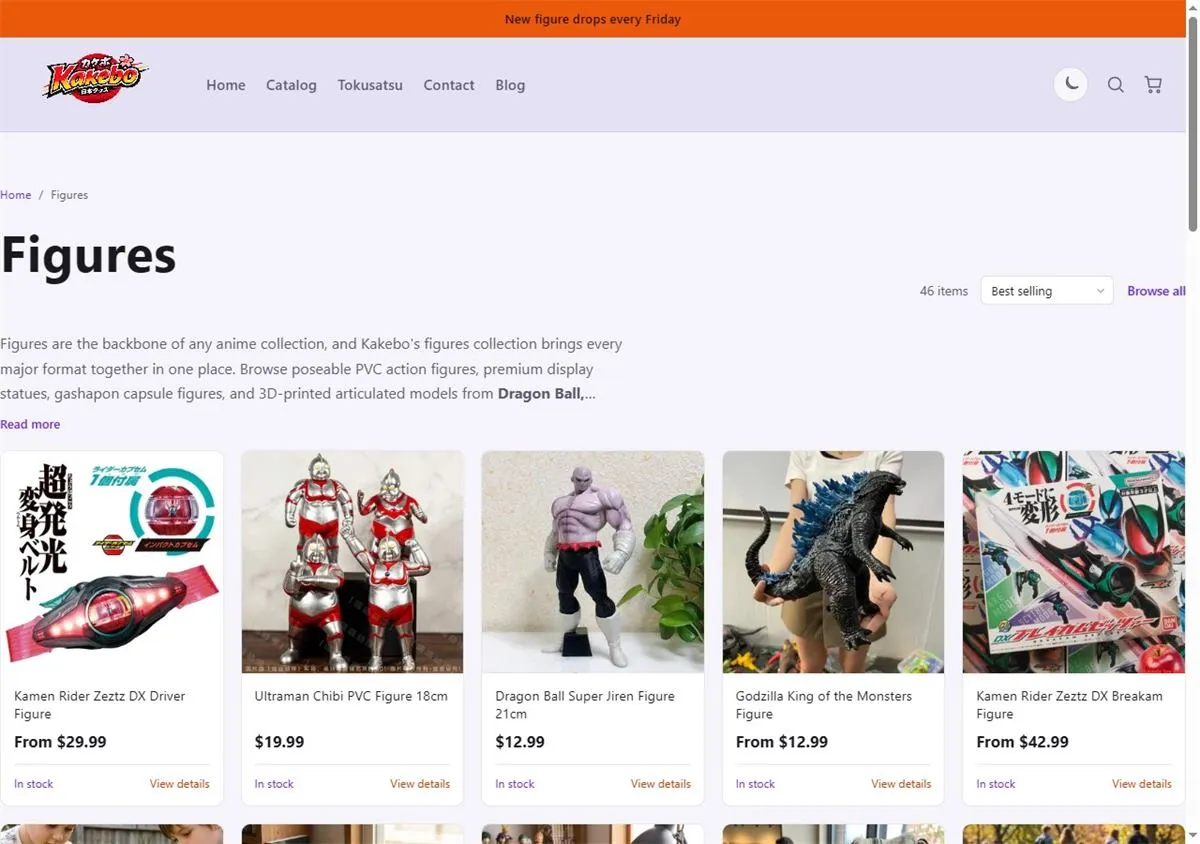
Collections reflect internal administration
A stock-management label is not necessarily a useful shopping category. Start with the ways buyers identify the product: category, franchise, material, use or release. Define the corresponding collection rules and data requirements explicitly. A rule is only dependable when the incoming product records contain the values it relies on.
The template assumes a perfect product
Real catalogs have long titles, several variants, missing optional fields and sold-out items. Check those cases on cards and product pages before accepting a template. A tidy demonstration product can hide clipped information or an action that implies stock is available when the selected option cannot be purchased.
Theme work and business settings get mixed together
A theme cannot independently decide payment-provider access, shipping policies, taxes or the store’s operational promises. Identify which changes belong in storefront code and which require the owner’s platform settings. That avoids presenting an attractive preview as proof that every live transaction configuration has been verified.