Kakebo Shop: keeping a growing collectibles catalog shoppable
Collectibles buyers arrive looking for a franchise, a character or a drop — not a category tree invented by a store owner. The structure had to follow how people actually shop.
Start an inquiryRelated service: Shopify development
- Evidence classPublicly attributed implementation · Shopify build
- Built withShopify, Liquid, Ecommerce structured data
- InspectableThe build, the decisions and the tests are all on the record.
The situation
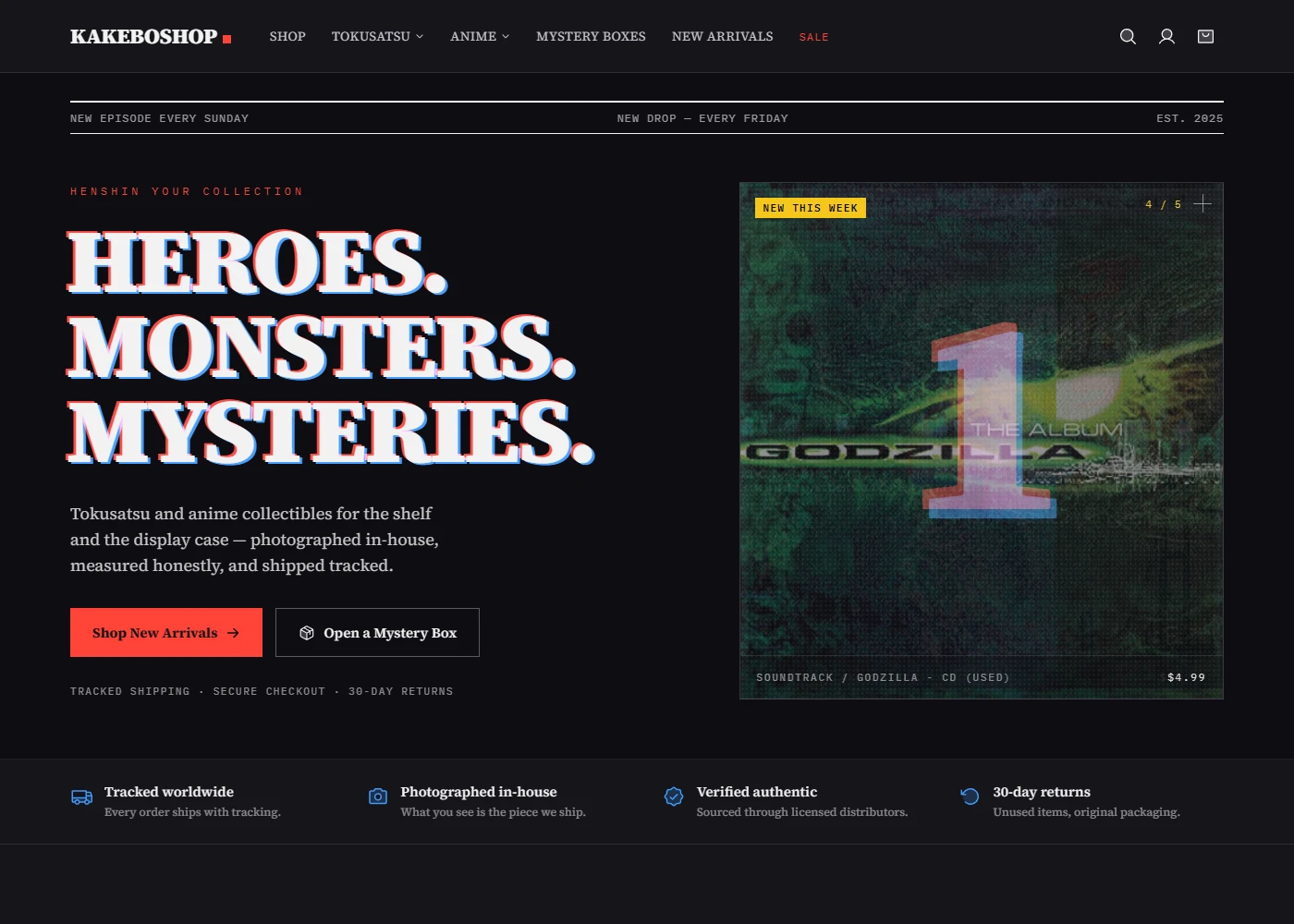
A catalog that grows weekly turns into a maze unless collections are generated by rules rather than curated by hand every time stock changes.
The commercial job was discovery: get a shopper from arrival to the right product page in as few decisions as possible.
What was built
- Franchise and character collections driven by automated collection rules rather than manual sorting.
- Product organization for drops and limited releases, including mystery-box style products.
- Merchandising components for featured and seasonal placement.
- Email capture for drop announcements.
- Ecommerce structured data and page metadata foundations.
What this evidence covers
Evidence class: Publicly attributed implementation · Shopify build.
- Store performance data stays with the owner. What is published here is the storefront structure and how it was built.
- Publicly attributed implementation — naming the commercial relationship would need the store owner's confirmation.
- Shopify development is a current service. This shows how the structure was built, not a promised result for another store.
Why it is on this site
Structure work: deciding what pages exist and how a buyer moves between them, which is the same first step in any website rebuild.
The same capability, applied to this service. This particular project was not commissioned under it.
Discuss the work your project needs
Describe the situation in a couple of sentences. The reply will distinguish relevant implementation capability from work outside the current service scope.